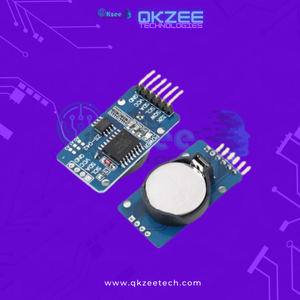
DS3231 RTC Module – Accurate Real-Time Clock with Battery
Introduction
The DS3231 RTC Module – Accurate Real-Time Clock with Battery is an essential component for any project requiring precise timekeeping. It offers unparalleled accuracy, even in temperature-variable environments, making it a favorite among students, DIY enthusiasts, and professionals working on engineering projects.
What is the DS3231 RTC Module
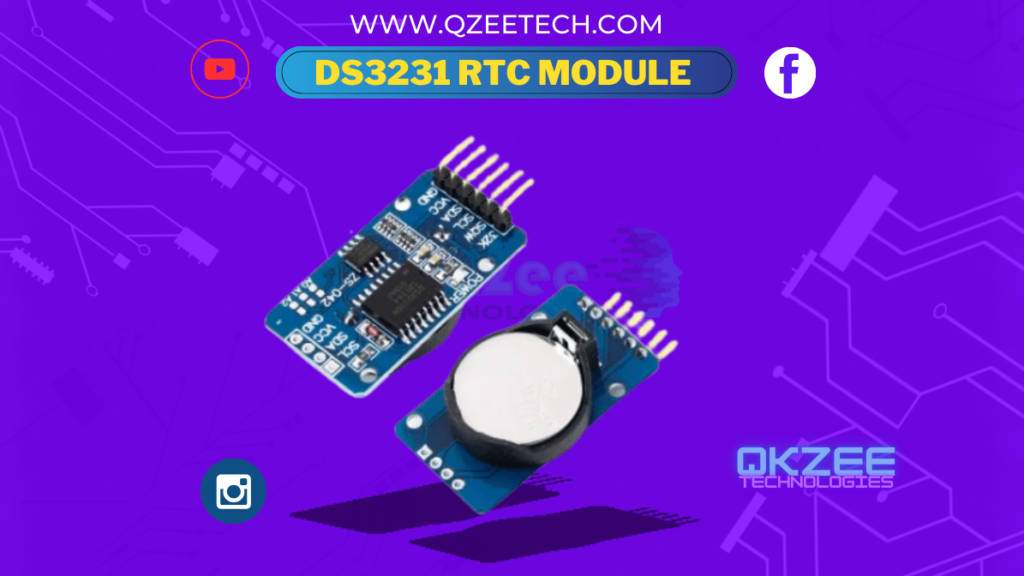
A Real-Time Clock (RTC) is a time-keeping device commonly used in systems that require consistent time-tracking, even when powered off. The DS3231 RTC Module excels in this domain due to its high accuracy and built-in battery backup, ensuring it keeps accurate time even during power interruptions.
Key Features of DS3231 RTC Module
The DS3231 RTC Module is packed with features that make it stand out among other real-time clocks:
- Temperature Compensated Crystal Oscillator (TCXO): Ensures time accuracy despite fluctuating temperatures.
- Battery Backup: Keeps the time running even when the main power source is disconnected.
- High Accuracy: ±2 ppm — roughly a minute of drift per year, ensuring precise timekeeping.
- I2C Communication Protocol: Allows easy interfacing with microcontrollers like Arduino.
DS3231 vs Other RTC Modules
The difference is clear when comparing the DS3231 to other common RTC modules like the DS1307. The DS3231 offers:
- Better accuracy due to the built-in TCXO.
- Battery backup support that is more reliable and efficient.
- Temperature compensation, making it far more precise in varying environmental conditions.
If you’re working on projects where time accuracy is critical, such as data logging or event-based automation, the DS3231 is the superior choice.
Understanding the Battery Backup
One of the key features of the DS3231 RTC Module is its battery backup capability. This ensures that the module continues to keep accurate time, even during power outages. Typically, a CR2032 battery is used, which can last for years, depending on the project’s power consumption.
The battery backup functionality is particularly useful for long-term projects, allowing you to maintain accurate logs without worrying about time resets during power failures.
How DS3231 RTC Works
The DS3231 RTC operates by utilizing an internal temperature-compensated crystal oscillator (TCXO) to generate accurate clock pulses. The time and date values are stored in its internal registers, which can be accessed via the I2C communication protocol.
It also has an onboard temperature sensor to compensate for any deviations in time due to changes in temperature. This makes the module extremely stable, providing more precise readings than many other RTC modules.
Pin Configuration of DS3231 Module
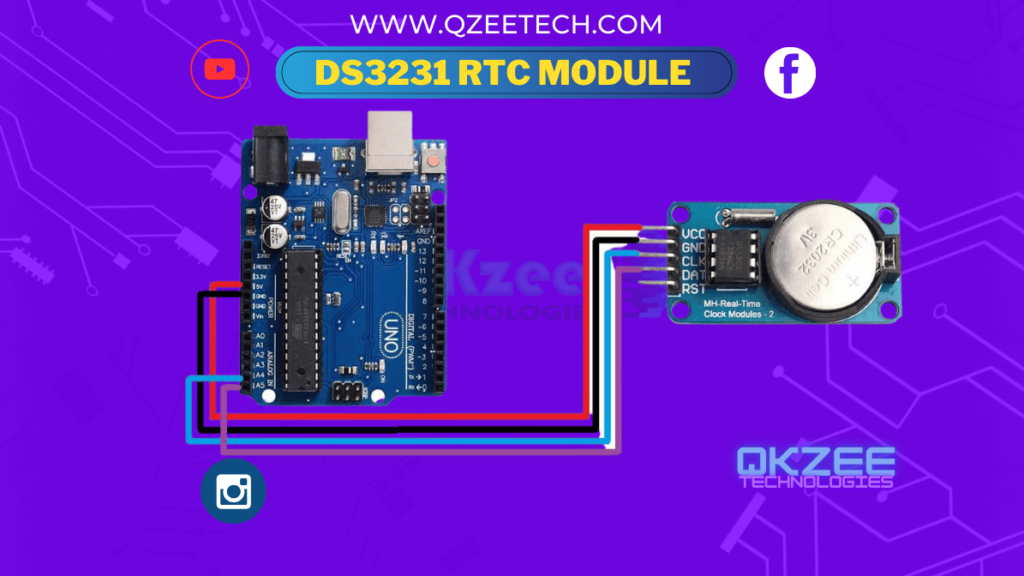
Connecting the DS3231 RTC Module to a microcontroller like Arduino is straightforward due to its simple pin layout:
| DS3231 pin | Arduino |
|---|---|
| VCC | 5V |
| GND | GND |
| SDA (labelled DAT on some boards) | A4 |
| SCL (labelled CLK on some boards) | A5 |
Ensuring these connections are correct is crucial for proper communication and functionality.
Applications of DS3231 RTC Module
The DS3231 RTC Module can be utilized in various applications that require precise time-keeping. These include:
- Data Logging: Ideal for recording timestamps for temperature, humidity, or other environmental conditions. See our IoT soil test station guide — it logs sensor readings with timestamps.
- Alarms: Great for creating event-based systems where time-triggered actions are necessary.
- IoT Systems: Used in devices that require periodic actions like sending data or checking sensors.
With its versatility and accuracy, the DS3231 finds use in many professional and educational projects.
Using DS3231 RTC with Arduino
For Arduino projects, the DS3231 is a must-have module. It’s easily integrated using the I2C protocol. To get started, simply connect the pins as described earlier and use libraries like RTClib to handle the communication and functions required.
DS3231 RTC Code Example
Here’s an example code for Arduino to interface with the DS3231 module:
#include <Wire.h>
#include <RTClib.h>

RTC_DS3231 rtc;

void setup () {
  Serial.begin(9600);

  if (!rtc.begin()) {
    Serial.println("Couldn't find RTC");
    while (1);
  }

  if (rtc.lostPower()) {
    rtc.adjust(DateTime(F(__DATE__), F(__TIME__)));
  }
}

void loop () {
  DateTime now = rtc.now();

  Serial.print(now.year(), DEC);
  Serial.print('/');
  Serial.print(now.month(), DEC);
  Serial.print('/');
  Serial.print(now.day(), DEC);
  Serial.print(" ");
  Serial.print(now.hour(), DEC);
  Serial.print(':');
  Serial.print(now.minute(), DEC);
  Serial.print(':');
  Serial.print(now.second(), DEC);
  Serial.println();

  delay(1000);
}
Explanation of the Code
This code reads and displays the time on the Serial Monitor, making it easy to use in various time-sensitive applications. rtc.begin() checks the module is connected; rtc.lostPower() is true when the battery was removed or the module is new, and in that case rtc.adjust() sets the time from your computer’s clock at compile time. After that, rtc.now() returns the current date and time, and the loop prints it once a second.
DS3231 Module for Final Year Projects
For students in Lahore, Pakistan, or around the world, the DS3231 is perfect for final-year engineering projects. Its high precision allows for complex time-based systems, such as automated watering systems, alarms, or data logging devices. See our Top 10 final year project ideas for more ideas that use a real-time clock.
DS3231 RTC for Beginners and Students
If you’re new to electronics, the DS3231 RTC Module is an excellent choice for your DIY projects or school projects. It’s easy to interface, reliable, and affordable, making it a great learning tool for students.
Where to Buy the Parts
| Component | Purpose | Price / link |
|---|---|---|
| DS3231 RTC module | Real-time clock (CR2032 battery included) | Rs 495 |
| Arduino Uno | Main controller | Arduino UNO R3 DIP — Rs 1,200 |
| DHT11 sensor | Temperature + humidity (for data logging) | Rs 215 |
| Jumper wires | Connections | Rs 180 |
| Breadboard | Prototyping | MB102 — Rs 250 |
The DS3231 RTC module (Rs 495), Arduino UNO R3 DIP (Rs 1,200), DHT11 sensor (Rs 215), jumper wires (Rs 180) and MB102 breadboard (Rs 250) are available at QKZEE Technologies, Shop 20, 1st Floor, Al-Khalil Center, Hall Road, Lahore, and online at qkzeetech.com with delivery all over Pakistan — see the links above. The CR2032 battery comes fitted with the module.
Still Stuck?
If the module is not found, or the time resets every time you unplug the Arduino, message us — tell us whether the CR2032 battery is fitted, whether the SDA/SCL wires are on A4/A5, and what the Serial Monitor shows, and we will help you find the fault.
FAQs
How accurate is the DS3231?
±2 ppm from 0°C to +40°C — roughly a minute of drift per year. That is about 30 times more accurate than the DS1307, which can drift several minutes a month.
Why does the time reset when I unplug the Arduino?
The CR2032 battery is either missing, flat, or not making contact. The battery keeps the clock running when the main power is off — without it, the time is lost.
Why does rtc.begin() fail with “Couldn’t find RTC”?
Check the wiring: SDA to A4, SCL to A5 on the UNO, VCC to 5V, GND to GND. Then check the I2C address (0x68) with an I2C scanner sketch.
My module’s pins are labelled CLK and DAT, not SCL and SDA. Is that the same thing?
Yes — CLK is the clock line (SCL) and DAT is the data line (SDA). Some DS3231 boards use those labels. Connect DAT to A4 and CLK to A5.
Can I use the DS3231 with an ESP32 or ESP8266?
Yes — it is an I2C module, so it works with any board that has I2C. On the ESP32, SDA is GPIO 21 and SCL is GPIO 22 by default.
Do I need a separate CR2032 battery?
No — the battery comes fitted with the module (Rs 495). A CR2032 typically lasts several years in this module.
Conclusion
The DS3231 RTC Module – Accurate Real-Time Clock with Battery is an essential tool for any project requiring precise and reliable timekeeping. Whether you’re working on a final year engineering project or a simple DIY project, this module offers both reliability and versatility.