- +92-302-8577025
- qkzeetech@gmail.com
- shop 20, 1st floor Al-khalil Center Hall Road , Lahore
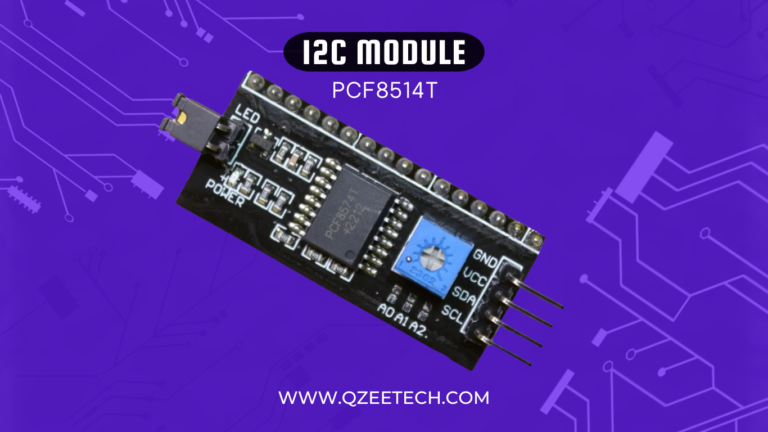
In the world of electronics, efficient data communication and reduced pin usage are essential for projects requiring multiple components to communicate smoothly. The PCF8514T I2C/IIC Module for LCD displays offers a simple and highly efficient way to connect LCDs to microcontrollers with minimal wiring, using the widely adopted I2C protocol. This article covers everything you need to know about the PCF8514T I2C/IIC module, from its features to practical uses and where to find it at the best price in Lahore, Pakistan.
The PCF8514T allows you to control an LCD display with only two wires (data and clock lines), as opposed to parallel communication, which requires several GPIO pins. This is incredibly useful when working on projects with limited pins, such as the Arduino Uno or the ESP8266.
By using I2C communication, the PCF8514T enables a more streamlined and organized data transfer, reducing noise and enhancing the efficiency of data flow between components.
One of the PCF8514T’s standout features is its low power consumption, making it ideal for battery-operated projects or energy-conscious applications.
The versatile module works seamlessly with 16×2, 20×4, and other LCD sizes, allowing project flexibility.
The I2C protocol’s simplicity makes it easy to set up with popular microcontrollers, such as Arduino, Raspberry Pi, and ESP32.
The I2C protocol uses two lines,
SDA (Serial Data)
SCL (Serial Clock)
to send data between devices. Each device on the I2C bus has a unique address, allowing communication between multiple devices with minimal wiring.
SDA carries the actual data, while SCL provides the clock signal. This makes I2C a synchronous communication protocol, meaning data transfer is in sync with the clock pulse, reducing errors.
I2C uses fewer pins than SPI and parallel communication, offering greater simplicity and compatibility with microcontrollers with limited pins.
Compared to other modules, the PCF8514T is widely available on Hall Road in Lahore and various online stores at competitive prices.
This module is popular among makers for building DIY Arduino and Raspberry Pi projects, like temperature monitors, clocks, and even robotic controls.
In the industrial field, this module is used for data displays, monitoring devices, and control panels due to its reliable communication and flexibility.
To get the best deals, QKZee Technologies Hall Road in Lahore is a hotspot for electronic components. Online stores also offer competitive prices, and bulk purchases may further reduce the cost.
To set up the PCF8514T, you’ll need:
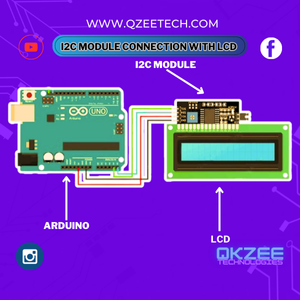
Using the Arduino IDE, you can load the LiquidCrystal_I2C library and follow a simple code snippet to display data.
With a few lines of code, you can display simple text on your LCD. Here’s an example of initializing and setting up a message on your LCD screen:
					#include <Wire.h>
#include <LiquidCrystal_I2C.h>

LiquidCrystal_I2C lcd(0x27, 20, 4);

void setup() {
  lcd.init();
  lcd.backlight();
  lcd.setCursor(0, 0);
  lcd.print("Hello, World!");
}

void loop() {
}
Customize the display by adding scrolling text, custom characters, or even animations to enhance your project’s interactivity.
I2C reduces the complexity of wiring multiple components, making it ideal for compact projects.
Since I2C is a synchronous protocol, it offers higher transfer rates compared to asynchronous communication methods, making data flow smoother.
Check if the wiring is correct and that the module is receiving the required power. Adjust the contrast if needed.
Ensure that the module’s address is correct in the code, as an incorrect address can cause display errors.
Use the potentiometer on the module to adjust the LCD contrast for better visibility.
If running on a limited power source, consider reducing the display brightness or backlight.
Looking for affordable components for this Arduino project? Check out QKZee Technologies, an online shop in Lahore, Pakistan, offering the best components for students and DIY projects. Whether you’re looking for sensors, modules, or other electronics at a cheap price, they’ve got it all. Visit them at QKZeeTech.
The PCF8514T I2C/IIC Module for LCD Displays is an excellent investment for hobbyists and professionals looking for efficient and compact LCD interfacing solutions. Its ability to reduce pin usage and enhance data transfer makes it ideal for a variety of applications, from DIY projects to industrial automation.